
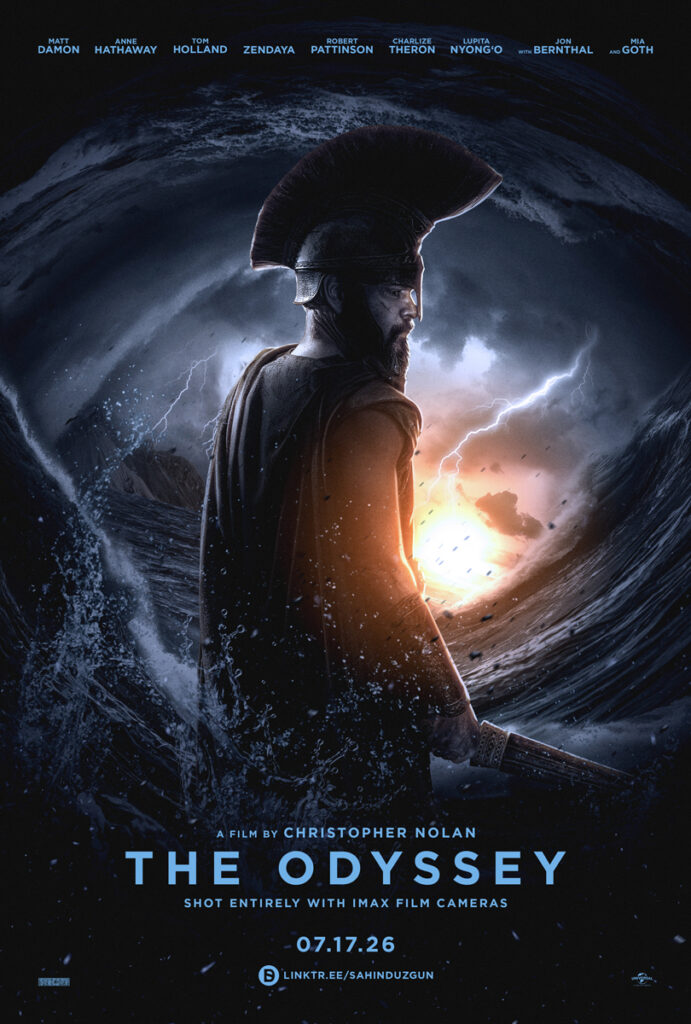
As if you haven’t heard enough chatter and debate about “the current thing”—Christopher Nolan’s The Odyssey—here I come discoing onto the dance floor, my arms full of opinions and deep thoughts. Saw it a few days ago, on a big screen with big sound, as its gifted creator intended.
First here, right out of the gate, let me say two things.
It’s clear to me that Nolan is just playing the game Hollywood economics and the Oscar Rules Committee has laid out. And he’s playing it brilliantly. The game?
First, if you want to make movies that are going to cost $250 million, you’re going to need people willing to fork over that kind of money, which means you need to know how to make a movie that is a big box-office success, so those people get their money back, plus something extra for having taken the risk.
Second, you probably want awards—especially Academy Awards. And recently the people who hand those out, have set certain rules concerning which films can be considered for their prestigious awards. Rules about “diversity” and “inclusion.”
So, when you combine these two realities, a lot of Nolan’s decisions about how to adapt one of the oldest epic stories of Western Civilization snap into focus.
Both priorities—box office success and award success—drive casting and scripting decisions.
Then there’s the challenge of presenting an ancient, culture-centric, complex story that most ticket-buyers have never read and making it accessible for them. Nolan met that challenge brilliantly.
Some art-minded directors (auteurs) making historical movies strive for as much historical accuracy as possible. And they tend to cast lesser-known actors (or sometimes completely unknown actors) in the main parts because they want the audience to see that character, NOT the celebrity. Nor the character from the previous five popular things that star was in. Mel Gibson has done this in his historical films. So has Robert Eggers, and others.
But given Nolan’s two-fold agenda—a big box office payoff for the investors and lots of awards—he went a different route. He cast an ensemble of the biggest box office draws on the planet. “Jason Bourne” is Odysseus for crying out loud. The wattage of the of star-power in this movie is astonishing. For example, Nolan cast two of the hottest young actors on the planet—Tom Holland (Spiderman) and Spiderman’s sweetheart Zendaya—in two key roles.
I don’t fault someone as gifted as Christopher Nolan for wanting to be commercially and conventionally successful. I want to be successful in my area of endeavor, too (although my faith, convictions, and values constrain me). And everything about The Odyssey shouts that Nolan was swinging for the fences. And every indication at this point is that he’s hit a home run. Good for him.
Suzy Weiss had a piece for The Free Press today called “Stop Overthinking ‘The Odyssey’”. That’s good advice, which I’m about to ignore. What follows is me, overthinking ‘The Odyssey.”
The Politics and Worldview of Nolan’s The Odyssey
Now to the topic that has occupied much of the writing and discussion around the movie since even before its release—its agenda (if it has one other than making money and getting awards). It may or may not have an agenda, but it certainly has a viewpoint.
I’ve written much on the blog in recent years about the battle for (and against) Western Civilization. (See here, here, here, and here for example.) Much of the hatred of and criticism of the U.S. (from within and without) is rooted in hatred of Western Civilization. And this is linked (spiritually) to the Christian underpinnings of Western Civilization. Put another way, there’s an anti-Christ spirit behind many of the liberal/Left critiques and narratives.
Perhaps that’s why this particular movie adaptation has gotten so much attention from those on the front lines of the culture wars. In addition to the Bible, The Odyssey and Greek epic poetry and literature sits at one of the deepest, foundational layers of this civilization—a civilization that has produced more human flourishing and progress than the planet has ever seen.
Prior to the release of the movie, many were curious as to whether Nolan’s take on the ancient epic poem would be (a) “woke” or (b) faithful to the original, or (c) something else entirely. By the way, the answer turned out to be “c.”
Those on the lookout for woke-ness pointed out that Nolen said he’d based his interpretation on Emily Wilson’s 2017 translation of the epic poem. Wilson is viewed by some as having applied modern “woke” sensibilities to the task of translation.
Nevertheless, after the film’s release, some conservative Western “Classics” scholars and writers pointed out how many of Nolan’s choices seemed to reflect a Christian or post-Christian take on Homer’s themes, instead.
For sure, Christians who see the film—even those unfamiliar with Homer’s epic poem—will recognize in Nolan’s exaggerated emphasis on “Zeus’s Law,” Christian themes such as The Golden Rule; the possibility of “entertaining angels [gods] unaware”; and the Old Testament exhortation to show hospitality to sojourning travelers passing through.
I had read many of those reviews and analyses prior to seeing the film. So, I was pre-biased to see those Christian themes. And I did. What I was not anticipating seeing was what I would call an “anti-war, anti-heroic, feminist, deconstruction of Homer’s Odyssey—all packaged in a gripping, spectacular, star-studded wrapper.
(And again, I enjoyed the movie. If you can stomach vivid violence, by all means go see it. Just know, as you should always know when you allow someone to tell you a story, that the storyteller has viewpoint, and possibly an agenda. I wrote about that very thing in a past post titled “A Story is Never Just a Story”.)
Let me start with the “anti-war” part.
Other than the projects of a few notable exceptions (Mel Gibson, Clint Eastwood, e.g.), over the last 50 years, if Hollywood is going to greenlight a movie depicting war and soldiers it has to do so in the most negative, nihilistic way possible, and soldiers have to be depicted as either bloodthirsty brutes; or railroaded, manipulated victims. Military commanders are invariably inept or corrupt or both.
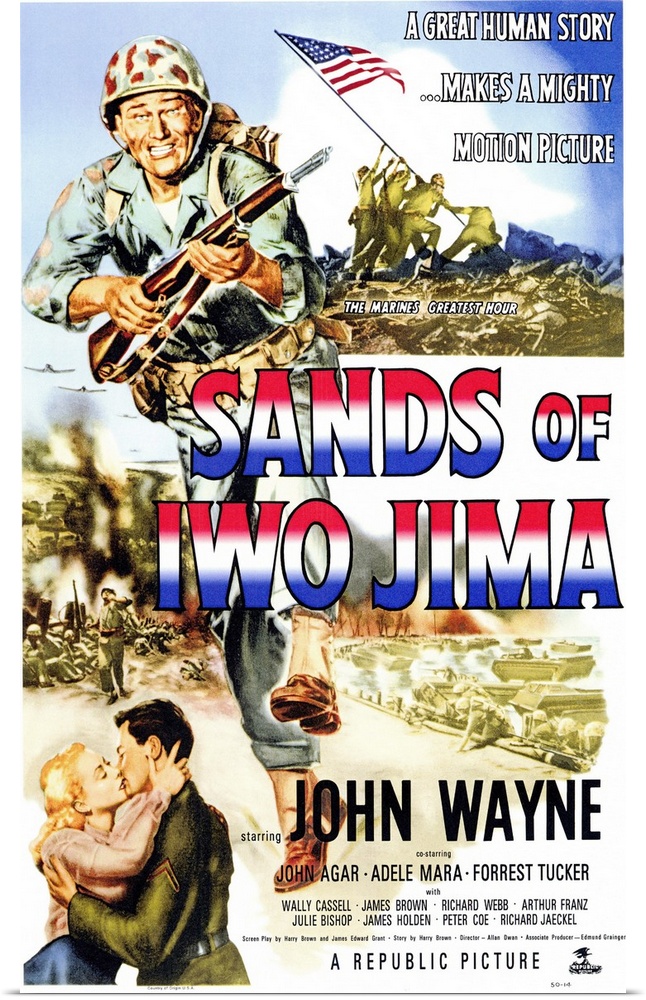

This was a dramatic departure from the great war classic war movies a lot of us remember watching as kids.
This is really no surprise. Hollywood and the Oscars stopped making movies that looked favorably upon war and war heroism 50 years ago—just after the Vietnam War.
Did movies in the ‘40s and ‘50s tend to airbrush out all of the ugliness of war? No doubt. Did they sometimes glamorize war for patriotic purposes? You bet.
But here’s a dirty little secret: if we’d been fighting the Soviets rather than the Nazis in World War II, the Hollywood filmmaking complex would not have been nearly as enthusiastic about getting Americans behind the war effort. Many of the writers, directors, and actors would have been, at best, conflicted. And yes, the Nazi’s were evil personified. But so were the Soviets.
Make no mistake about it, war is ugly. But it also periodically necessary. Good and evil exist. Freedom is precious and worth defending. And there are evil actors in the world who occasionally need to be confronted with force. Preferably overwhelming force.
But The Odyssey is very much in the tradition of New Hollywood’s approach to depicting war. That is, never necessary and never righteous. Here Odysseus is an inept military commander who keeps getting his men killed through foolish decisions.
Which brings me to . . .
The “Anti-Heroism” Part
Over the last fifty years, Hollywood has generally developed an allergy to depicting war fighting as heroic and noble. (Sure, one can find exceptions.) But even Steven Spielberg seems to recognize this, so in Saving Private Ryan, the heroics of Tom Hanks and company aren’t about defeating the enemies of freedom. They’re about keeping the last surviving son of a poor mother from getting ground up in the war machine.
The big recent exception here is superhero/comic book movies. The film industry allows itself to revert back to the old days of heroic, uncomplicated Good Guys and irredeemably bad Bad Guys, but only because it’s an alternative, fantasy universe that doesn’t really exist.
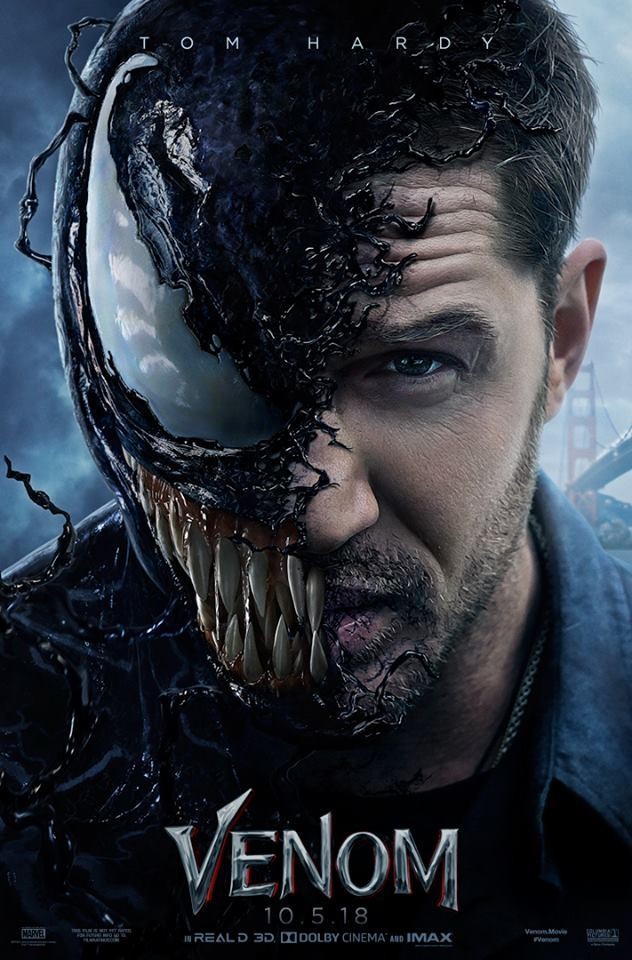
But even here, the studios churning out these films can’t help themselves. In The Avengers series, we have the Avengers: Civil War, wherein, in the previous installment, the Avengers save the world from an alien invasion that would have exterminated or enslaved the entire population or Earth. But the premise, (yes, I know it came from the comic books) is that the world us unhappy about the collateral and material damage to NYC in “The Battle of New York” and therefore has decided that they need to keep the world-savers on a short leash.
At the same time, the industry has fallen in love with “the anti-hero.” Not virtuous. Not noble. Not nice. Just a brutal vengeance machine. (The “Revenge” plot archetype is one of the most common in movies today.
Which brings us back to Nolan’s take on Odysseus. (It, also, is basically the Revenge plot archetype) He’s not a hero. He’s a clever man and skilled fighter who got sucked into the war-with-Troy hysteria and did terrible things as a result. Wracked by guilt and regret about the war, he just wants to get home. This fits the “acceptable” model perfectly.
Yes, it was a great movie. But I’ll not be in denial that the film was anti-heroic. You can lay this movie alongside the recent polling that showed only 32% of European young people would be willing to fight to defend their homeland under any circumstances. And any Christian or post-Christian themes in The Odyssey are decidedly of the Quaker pacifist variety.
Now for the “Feminist” Part
I saw this on X the other day:
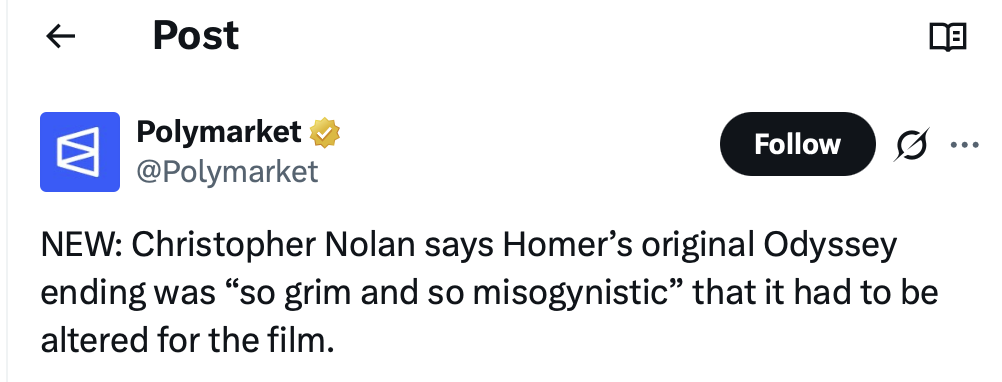
The very fact the Nolan used the term “misogynistic” here is a tell. The movie I saw was old-school feminist through and through. The story Nolan tells has a low view of masculinity and all of the characters with real power and agency in the movie are female. (Not that there’s anything wrong with that. But that’s not Homer’s Odyssey.)
The God-given masculine impulse to defend home and family, with violence if necessary, are not viewed favorably in orthodox feminist literature. And they’re not viewed favorably in this movie. The goddess worshippers of our day wholeheartedly believe that if feminine values and ways were applied to world affairs, we’d be living in a peaceful Utopia.
The most telling moment in Nolan’s film is when Odysseus’s men are turned into pigs by the witch, Circe. Yes, this happens in the original poem. But in Homer’s Odyssey, Circe uses a spell to turn the men into pigs and then reverses the spell with a potion. When restored to humanity, the men are actually more handsome, strong, and vital than before. But . . .
Nolen’s Circe is angry and hateful in the first transformation. And when forced by Odysseus to reverse the curse, she does so by whispering, “Back into your disguises. Back into your disguises.” Men really are pigs, we’re meant to think. We’re just disguised as human.
This is not Homer. This is ham-fisted “all men are pigs” feminist orthodoxy written into the screenplay.
Here’s the Truth . . .
. . . one you won’t find in this magnificent piece of filmmaking.
The masculine and the feminine are both God-created and God-ordained. Both were twisted by the fall. And at the core of the masculine is an impulse to be “the hero” for the people he loves. An impulse to defend, and protect, and rescue, and, if necessary, kill in order to feed them or protect them.
This is a truth that Postmodern “art” cannot abide. Will not abide. A truth the Academy will not reward. Thus, a truth that is barely present in Nolan’s The Odyssey, although it’s there if you look hard enough.
Am I overthinking it? Probably. But I do it, so you don’t have to.